01 / Patrol
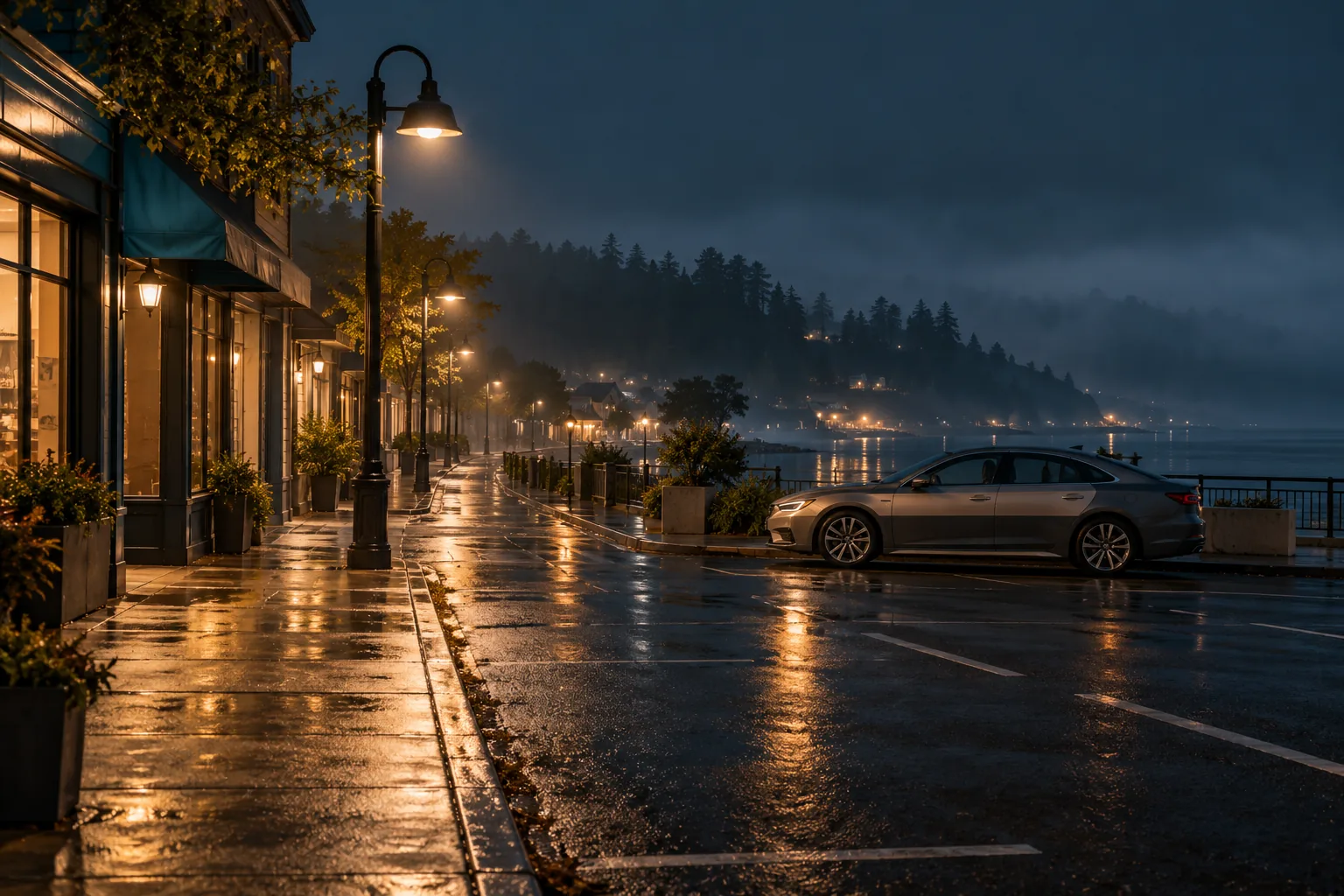
Mobile patrol
Marked patrol cars checking your property at unpredictable times through the night.
View details
Guide
Two very different ways to protect a property, at very different costs. Here’s how to tell which suits yours.
A posted officer stays on your property for the entire shift. Patrol sends a marked car to your property several times a night, at times that shift from one night to the next. The first gives you a constant presence and a person to greet whoever walks up. The second gives you regular, unpredictable checks for far fewer paid hours.
Neither one wins everywhere. The right choice comes down to what you’re protecting, when it’s most exposed and how much you want to spend each month.
Start here, because it settles most cases. If people keep coming and going after dark, someone needs to be there to meet them. A hotel lobby at midnight, a venue door on a Saturday, an office where tenants work late and a shop closing out the till all need a person on site, not a visit every few hours.
A posted officer is also the better pick when the trouble never lets up: a lot that keeps getting hit, cash kept on the premises or a property that had a break-in last week. Nothing deters quite like someone who is always there.
Many Santa Cruz properties sit empty from evening until morning. Downtown storefronts after closing, Westside offices after six and a remodel once the crews go home have nobody to greet, so paying someone to sit by the door all night is hard to justify.
Patrol covers those properties by turning up when nobody expects it. Our officers drive marked cars, try the doors and gates, walk the lot and record each stop with the time. The number of visits follows your budget, and because the timing keeps changing, anyone watching the property can’t guess when the next car will pull in.
This town doesn’t stay the same all year, and your coverage doesn’t have to either. A hotel or apartment building close to the beach might want an officer on site through the summer weekends, when the lot is full and people are out late, then switch back to patrol stops once the crowds thin out in the fall.
The same goes for shops along Pacific Avenue around the holidays, or a property near campus at the start of the school year. Month-to-month terms make each change a quick conversation.
Plenty of clients use the two together. An officer covers the busy evening hours, then patrol takes over overnight. Add live camera watching and the quiet stretches between stops are covered too, often for less than one overnight post.
To decide, bring three answers to the free walkthrough: who is on the property at night, what has already happened and how much ground there is. We’ll lay out both options side by side in a written proposal, and you can switch later if the first choice isn’t right.
Picture a building on Pacific Avenue with a shop at street level and a few offices upstairs. The shop is busiest from late morning until it closes at nine, and the offices empty out by six. After nine, nobody is inside until morning.
A sensible plan uses both approaches. An officer covers the shop during the busy evening hours and the closing routine. After that, patrol stops check the front glass, the back door and the alley a few times through the night. Each hour gets the kind of coverage it needs, and nobody pays for an officer to watch an empty building.
At 2026 Santa Cruz rates, three unannounced patrol stops a night come to about 90 stops a month, and at $38 a stop that is roughly $3,420. An officer posted from 10 p.m. to 6 a.m. every night works about 243 hours a month, which at $44 an hour comes to about $10,690.
That gap is why patrol suits properties that sit empty overnight, and why a posted officer is saved for the places where people come and go after dark. The security guard services page shows what moves the hourly rate up or down.
A few useful answers
Usually, because you pay for visits rather than a full shift on site.
Not hard at all. Because the agreement is month to month, adding a posted officer is just an update to the plan.
Patrol logs show what each stop found, not every person who came by. If you need a record of visitors, that calls for a posted officer.
Services
01 / Patrol
Marked patrol cars checking your property at unpredictable times through the night.
View details02 / On-site
A uniformed officer on your property who learns its doors, its regulars and its quiet hours.
View details