01
Phone us first
Which system went down, and which floors or buildings lose protection.

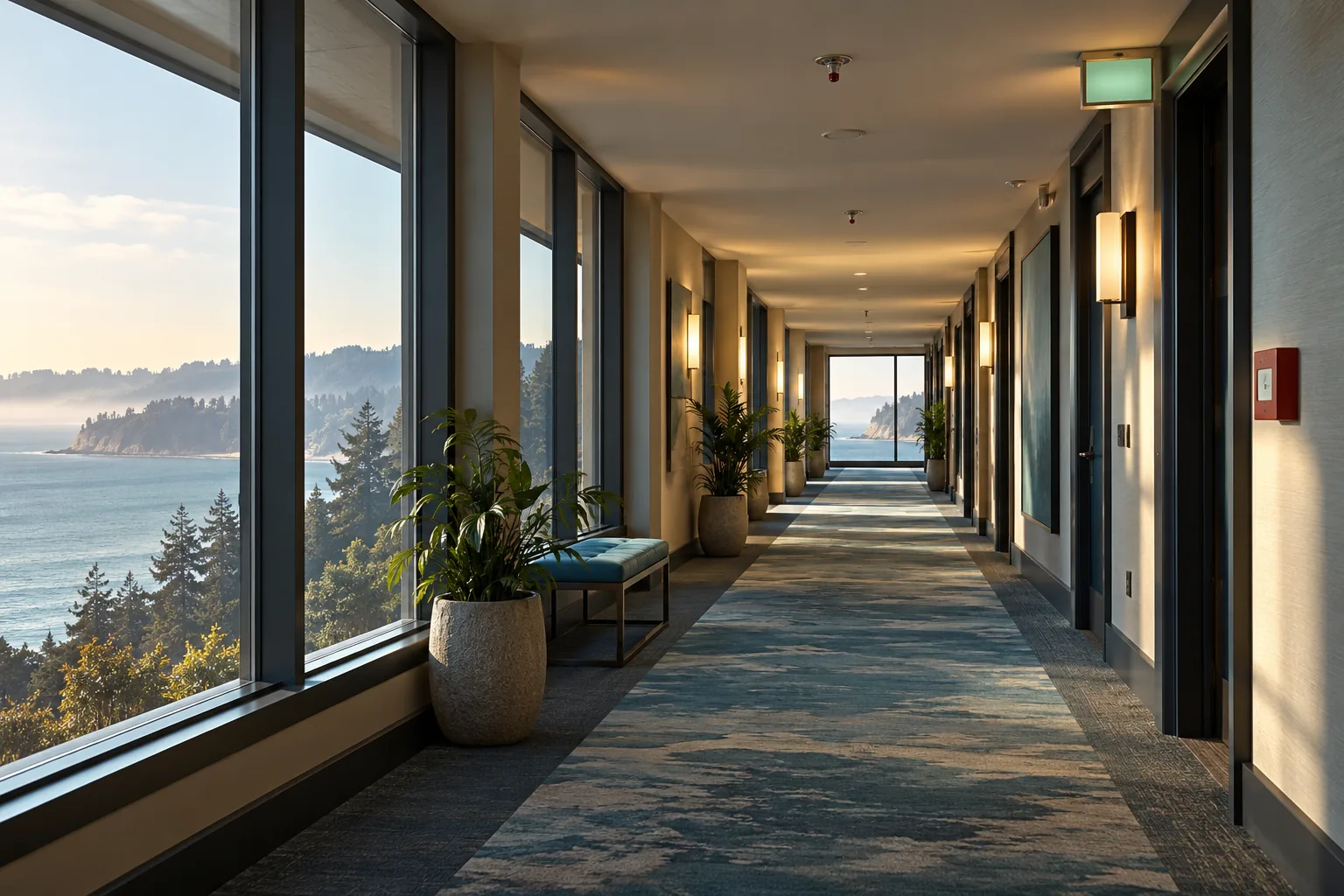
Fire watch in Santa Cruz
An officer walking continuous rounds while your Santa Cruz building’s fire alarm or sprinklers are down, with each round written into a timed log.
A dead alarm panel or a sprinkler line drained for repairs has a way of showing up on a Friday afternoon. Hotels full of guests, apartment buildings, offices and the shops along Pacific Avenue all get the news eventually. From that moment until the system is fixed, a person has to stand in for it.
That person is the fire watch officer, and the post is narrow on purpose. They loop through each affected floor, room and stairwell, alert to smoke, heat, sparks and anything blocking an exit, ready to sound the alarm and get people out. The timed log they keep sits on the property where your contractor or an inspector can read it.
Phone us the moment you hear the system is offline, and we’ll start setting up rounds. A watch can cover one night, a weekend or a 24-hour post that lasts until the repair is signed off. On jobsites with hot work, it runs beside the regular security plan.
Step by step
01
Which system went down, and which floors or buildings lose protection.
02
One loop that passes through every area the outage touches.
03
The officer keeps circling, without stopping, until the repair is done.
04
Every round written down with its time, and left on site for you.
Say the alarm panel at a Westside office building fails at four on a Friday. You call us, tell us which floors the panel covers and who can let the officer in. Before the first round, the officer walks the building with your contact, learns where the exits, stairwells and mechanical rooms are and sets a loop that passes through every affected area.
From then on, the rounds repeat. Every loop is written down with its time, and the log stays on site. When your contractor finishes the repair on Monday and it is signed off, the officer records the time, makes a final round and hands you the log.
A fire watch only covers the rooms the officer can reach. Have keys or codes ready for every space on the loop, including mechanical rooms, stairwells and locked storage, and point out the alarm panel and the nearest pull stations.
The officer also needs a short call list: whoever manages the property, the alarm or sprinkler contractor and the person who should hear first if something turns up. If the building already has a desk officer or overnight patrol stops, those carry on beside the watch. Our fire watch guide answers the questions owners ask about the log and about ending a watch.
Fire watch is billed by the guard-hour, and the hours add up fast because the post runs until the system is fixed. Market data from 2026 puts Santa Cruz fire watch at $36 to $82 an hour, with most watches between $41 and $60. A single-floor watch sits near the bottom.
Picture a beach-area hotel whose sprinkler line is drained on a Friday afternoon, with the repair crew booked for Wednesday. That’s a 24-hour post for five days, or 120 hours. At $52 an hour, the watch costs about $6,240. If the panel is fixed a day early, the hours stop there, and if parts are delayed, each extra day adds roughly $1,248.
The rate climbs toward $82 when the building is large or full: several floors of guests or residents, more than one officer needed to keep each round on schedule, or a call at 4 p.m. on a holiday weekend. Exits and stairwells spread across a wide footprint, tight round intervals and long overnight stretches push it up too. A small shop with one affected room sits near the bottom. Call as soon as you hear the system is down. We confirm the scope with you, and the written proposal spells out the hours and the rate before the first round.
A few useful answers
The fire department and your alarm or sprinkler contractor. Once they tell you one is needed, call us and we’ll put an officer on the rounds.
Which system is out, the floors or buildings it protects, when the repair is expected and who can meet the officer with keys. With those details the rounds can be planned on that first call.
The time of each loop, the areas it covered and anything the officer spotted, from a propped fire door to a smell of smoke.
Yes. Rounds continue for as long as the system is down, nights and weekends included.
Yes. The loop is limited to the spaces the impaired system protects, and each round in the log names them.
Once your contractor has the system working again and it has been signed off. The officer records the time, finishes one last loop and gives you the log.
Related services
01 / Construction
Gate check-in, overnight officers and patrol that keep jobsites from being picked over.
View details02 / Short notice
Short-notice, overnight and 24-hour officers, without a long contract.
View details03 / On-site
A uniformed officer on your property who learns its doors, its regulars and its quiet hours.
View detailsIndustries
01 / Industry
A front desk officer by day and a careful lockup at night for office buildings.
View details02 / Industry
Overnight lobby officers and patrols for hotels, motels, inns and vacation lodging.
View details03 / Industry
Overnight patrol and gate or lobby posts that help residents feel at home.
View detailsResources