01 / On-site
Security guard services
A uniformed officer on your property who learns its doors, its regulars and its quiet hours.
View details
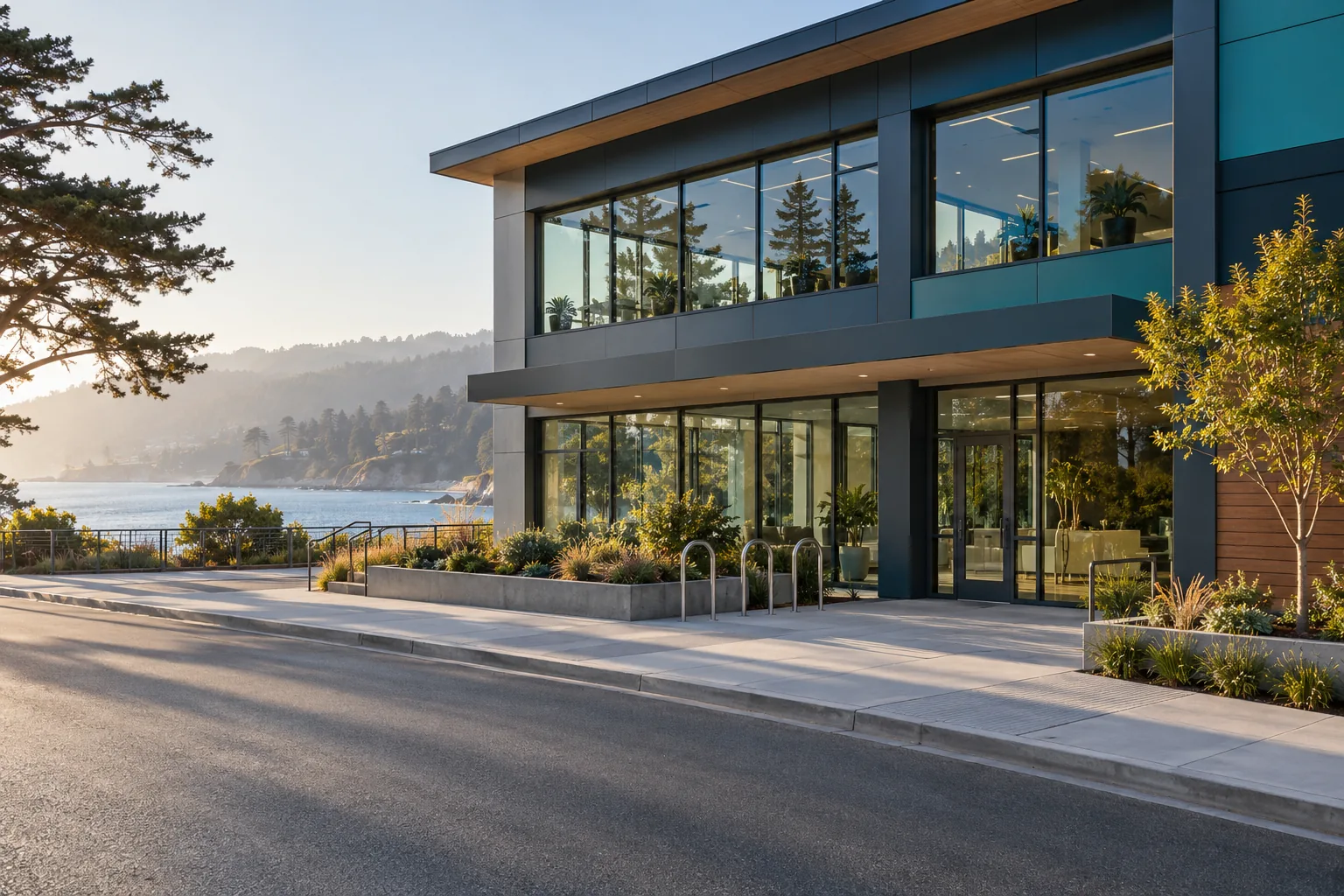
Offices and corporate campuses
Security for Santa Cruz office buildings: a familiar face at the front desk while tenants work, and a careful sweep of the building after they leave.
An office building downtown, on the Westside or along Mission Street lives two lives. From nine to five it’s tenants, clients, couriers and the occasional lost visitor who wandered in from the street. By seven it’s dark hallways, a half-empty garage and a back door someone forgot to pull shut.
A daytime officer greets people by name, sends visitors to the right floor and keeps a log of packages and couriers. At lockup, the same officer, or a patrol car on its overnight route, tries every exterior door, checks the bike room and garage levels and notes any light that’s out. Each stop is written down with the time.
Some offices sit on a small campus, two or three buildings sharing one lot. There a roving officer moves between the lobbies and the parking on a set loop, and each building gets its own entries in the report.
Services
01 / On-site
A uniformed officer on your property who learns its doors, its regulars and its quiet hours.
View details02 / Unarmed
Approachable officers for shops, hotels, offices, clinics, campuses and apartment buildings.
View details03 / Video
Your current cameras watched live while the property is closed or quiet.
View detailsIn a town where plenty of people bike to work, the bike room is often the most valuable unwatched space in an office building. Expensive bikes sit behind a door that tenants prop open on their way in. The garage and the side doors used by smokers and delivery drivers come a close second.
The officer checks each of those on every round, makes sure doors close behind people and notes any that are found open. Over a few weeks, the log shows which doors need a better closer and which tenants need a reminder.
A tenant moving in brings a crew, a truck and doors held open for hours. Someone working late on a deadline wants to know the building is watched. Cleaning crews come and go with their own keys.
Each of those gets written into the post orders: who is expected, when and which doors they use. The officer greets the people on the list, checks anyone who is not and logs everyone in and out. For overnight coverage, marked patrol visits pick up after the last person leaves.
Lockup is the most important ten minutes of an office post. The officer walks every floor, tries each exterior door, checks the stairwells and makes sure the garage gate has closed. Lights that are out and windows left open go into the log. A supervisor drops in for quality inspections now and then, retracing part of the route with the log in hand to confirm each door really was tried.
Property managers get the shift report by email, with photos of anything unusual. For a lobby post, the unarmed officer page describes what the rest of the day looks like.
Office posts in Santa Cruz mostly run $38 to $46 an hour on 2026 figures for the area. The work is steady and predictable: a lobby and access post during business hours, with a lighter after-hours patrol once tenants leave. That pattern keeps the rate moderate and puts most of the budget into daytime hours.
Picture a Mission Street office building with an officer at the front desk from 7:30 a.m. to 5:30 p.m., Monday through Friday. Fifty hours a week is about 217 hours a month, and at $40 an hour the post comes to around $8,680. Two patrol stops each night to try the doors and check the garage add a modest amount on top, far less than keeping the desk staffed all night. The rate rises toward $64 when the officer also runs visitor badges, logs couriers and packages or covers several entrances. A free walkthrough with your property manager leads to a written proposal.
A few useful answers
Often, yes. The officer splits the shift between the desk and rounds of the parking.
Yes. Deliveries can be signed in at the front desk.
Yes. Coverage can be adjusted from one month to the next.
The crews are listed in the post orders. The officer checks them in, notes the time and logs when they leave.
The officer phones the tenant, waits for a yes before letting the visitor up and notes the visit in the log.
Resources